Scientific research, cloud data engineering, machine learning, AI agents and custom software for universities, R&D centers and companies. Our team of PhDs, master's graduates and engineers has more than 15 years of field experience and more than 10 years in academia.
If your company still decides by gut feeling or with scattered spreadsheets, we build the platform that connects your sources, organizes the information and takes it to dashboards that management checks every day.
One version of the numbers
We connect systems, spreadsheets, databases, APIs and sensors. Quality rules warn you when a piece of data fails before it reaches a report.
Dashboards people actually use
We define the indicators with the people who make the decisions and publish them in Power BI, Apache Superset or Tableau, with scheduled refresh and alerts.
Data with an owner and permissions
Roles and access with the minimum of permissions, using IAM on AWS and role-based access control on Azure. Each person sees only what concerns them.
A Socratic agent does not hand over the answer. It asks the question that leads students to find it, and tells them which work from their course to keep reading.
1
The instructor sets the framework
They choose the readings, the goals of each session and the agent's rules. The agent works only with that material.
2
The group talks and asks for help
Students reason together. When they call the agent, it answers with a question and a pointer to where to look, not with literal quotations.
3
The instructor sees the process
A dashboard shows how each group participates and what it agreed on, and lets the instructor write inside the conversation.
What we build: the design of the questions with the teaching team, the agent connected to the course material, the instructor dashboard, informed consent and an evaluation with real cases before opening it to students.
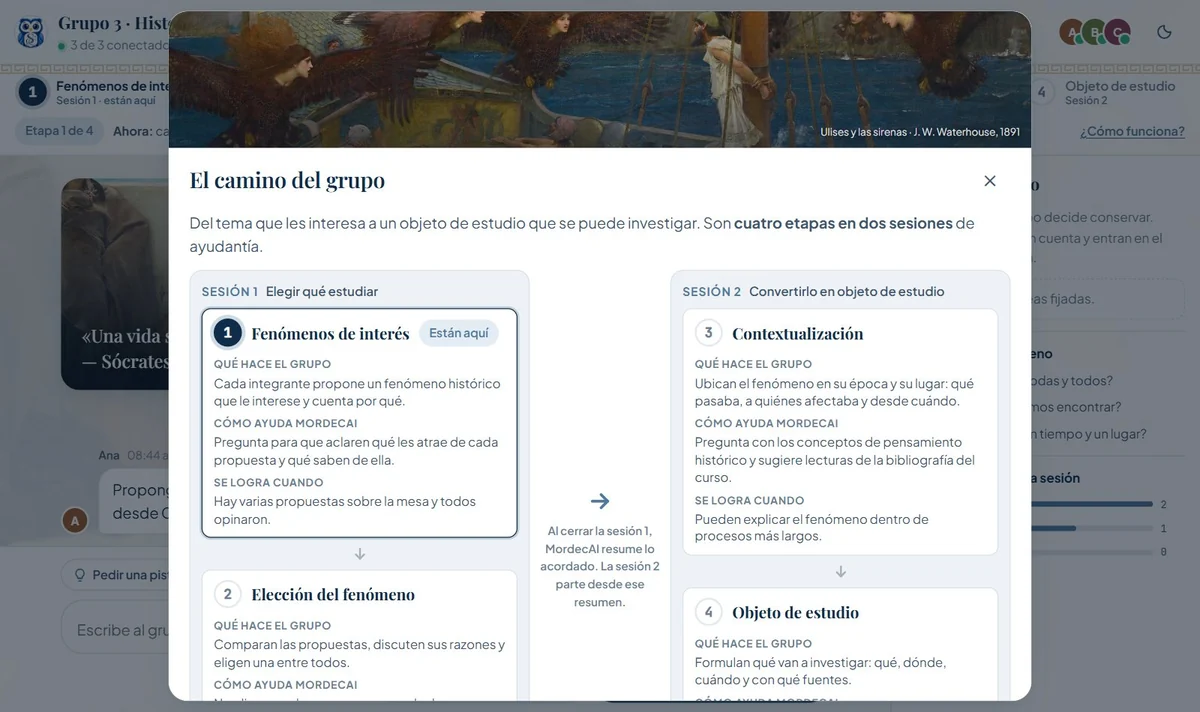
A group's path in four stages, and an agent reply in a demonstration session with a sample group: a question and the reference to look up in the library.
Case studies
Featured developments
Two of our developments. For each one we explain what it solves, how it works and what stage it is in today.
We have worked with universities, scientific laboratories and the academic sector, and with companies in industry, engineering, banking, telemetry and legal services.
Universities
Scientific laboratories
Academic sector
Industry
Engineering
Banking
Telemetry
Legal sector
Companies
Scope
What we do and what stays on your side
Before we start, we put the scope, the deliverables and the timelines in writing. These rules apply to every project.
What we do
We choose methods that fit your question, with reproducible calculations and verified references.
We review every deliverable internally before sending it to you.
We deliver what the proposal says. If something does not meet what was agreed, we fix it at no cost.
The reports, code, figures and dashboards made for you become yours once the project is paid in full.
What stays on your side
The question, the hypotheses, the interpretation of results and the final decisions.
Your data, documents and access, complete and on time.
Signing the manuscript and choosing the journal.
In expert witness work, the case strategy and the decision to file the report.
What we do not do
We do not invent, alter or manipulate data or results.
We do not write work for you to present as your own where that is prohibited.
We do not charge for an expert report based on the outcome of the trial.
We do not use your data to train external models.
What we cannot guarantee
That a journal accepts your article.
That a fund or competition is awarded.
The decision of a court or a committee.
How a model will perform on data that does not exist yet.
PhDs, master's graduates and engineers working together
We bring together information science, physics, statistics, machine learning, deep learning, philosophy, health sciences, social sciences, engineering and data science. We work from Concepción, with projects in Chile, Colombia and other countries.
+15
years of field experience
+10
years in academia
CL · CO
projects in Chile and Colombia
Do you have a project in mind?
Tell us what you need and we will propose a roadmap tailored to you.
Two of our developments. For each one we explain what problem it solves, what we built, how it works and what stage it is in today.
University of ChileHigher educationWorking prototype · pilot planned for the first semester of 2027
MordecAI, an agent that supports group work with questions
We built it for an undergraduate history course at the University of Chile. Student groups move from a topic they care about to a research object that can actually be investigated, and the agent supports them at every stage without doing the work for them.
What we built
Group workspaceStudents talk in real time and call the agent when they need it. The agent answers only when the group asks.
Questions, not answersIt asks one question per turn and chooses its type: clarify, check assumptions, ask for evidence, compare perspectives, weigh consequences or reflect. It invites anyone who has not spoken yet to join in.
Course libraryIt consults only the readings the instructor defines. Instead of quotations, it gives the reference to look up: author, work, edition and chapter, with a link to the university's Digital Library.
Instructor dashboardOpens and closes sessions, follows each group live, measures each member's participation, can write inside a group and downloads the conversations.
Consent and dataEach student reads the university's informed consent and decides whether to give it. We record who did so, when and on which version of the text. The export for the study replaces names with codes.
Where it stands today
Already worksThe prototype runs end to end with the readings the instructor provided. We tested it with real language models and with sample groups.
Before the pilotThe instructor validates the readings and the agent's rules in writing, and each student learns about the informed consent before using it.
PilotIt is planned for the first semester of 2027, with students from the course.
ResultsResults with students will be measured in the pilot. Until then we have no usage figures and we do not publish any.
What this kind of development includes
Design of the teaching path with the instructor.
Agent connected to the course readings.
Group workspace and instructor dashboard.
Informed consent and records.
Evaluation with real cases.
User guide and surveys for instructors and students.
What stays with the university
Choosing and validating the readings and the agent's rules.
Deciding the teaching rules of the course.
Holding the rights to use the material that is loaded.
SafeGuard SST, a worksite's risk prevention in one place
A platform for companies with worksites that must keep their documents, signatures, inspections and reports up to date, and be able to show them in an inspection.
What it includes
Risk matrix and IRLThe occupational risk information for each worker, by worksite.
On-site signingDocuments signed with a QR code, even without a signal.
Inspections and findingsWith deadlines and expiry alerts.
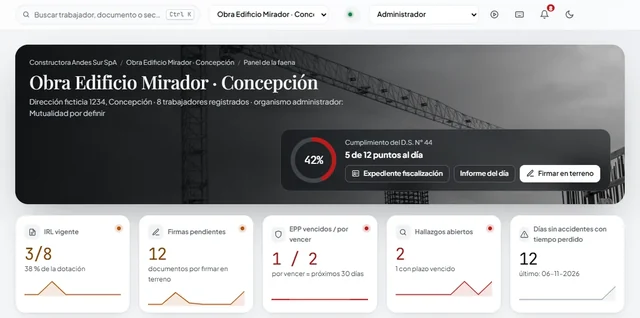
Joint committee and D.S. No. 44Compliance tracked point by point.
Accident rates and D.S. No. 67Days lost, with their supporting documents.
Inspector accessInspection file and monthly report in one click.
How we built it
Every obligation the platform shows was checked against its official source: the text of the regulation in Chile's National Congress Library and the instructions of the Superintendence of Social Security and the Labor Directorate.
Where it stands today
AvailableWe show it in a guided demo, with a sample worksite and fictitious data. The demo shows part of the product.
For your companyThe scope is defined in a conversation: how many worksites, which users and which documents you need to manage.
Researchers prepare the expert report, and the expert witness explains and defends it in court.
04 · Expert witness
Scientific and technical expert reports
When a case depends on data, scientific analysis or systems, we prepare the expert report with the same rigor a scientific journal demands. Then the expert explains and defends it before the court.
Expert reportMethodology, assumptions and limitations in plain view, with annexes that make every calculation reproducible.
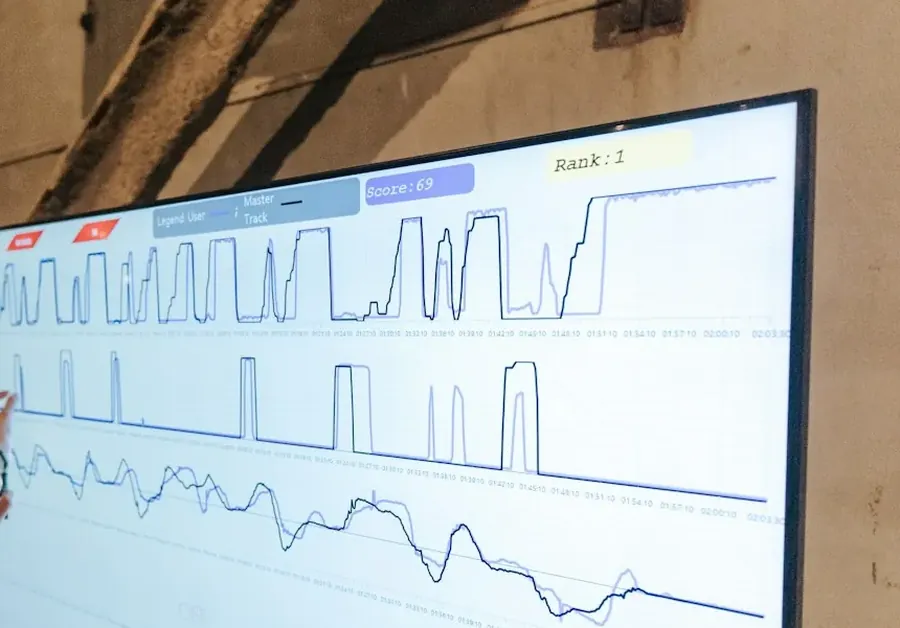
Data and systems analysisLogs, telemetry, transactions and databases, reviewed with verifiable methods.
Review of the opposing reportWe find methodological errors and conclusions the data do not support.
Testimony at the hearingWe prepare the presentation, and the expert explains and answers questions before the judge.
Hundreds of unsorted papers, weeks of manual searching and the risk of a bias that ends in rejection.
We search and screen following PRISMA 2020. References end up organized in an auditable evidence base, with every DOI verified.
What it includes
Search strings for Scopus, Web of Science and PubMed.
Duplicate removal and a record of every exclusion.
Full-text reading by PhD researchers.
Extraction matrix and gap detection.
Outcome: solid evidence to justify the novelty of your work.
02With your data · 2 to 4 weeks
Analysis and modeling
Data with missing values or outliers, doubts about which test to apply and models that are hard to calibrate.
We clean your dataset and apply the analysis your question needs: from descriptive statistics to multivariate, multilevel, hierarchical, structural equation and predictive models.
What it includes
Cleaning, justified imputation and outlier detection.
Parametric and non-parametric tests (ANOVA, regression).
Predictive models with an explanation of each variable.
High-resolution figures (300+ DPI) and journal-ready tables.
Outcome: findings ready to interpret, discuss and defend.
03Publishing strategy · 1 to 2 weeks
Where to publish?
Desk rejections from choosing an off-scope journal, excessive publication fees and waits of more than a year.
We compare indexed journals by topic fit, costs and peer-review times, and check your manuscript against their author guidelines.
What it includes
Shortlist of 3 to 5 WoS / Scopus journals (Q1–Q2) with a good fit.
Comparison of publication costs (APC).
Average peer-review times.
Requirements checklist for the chosen journal.
Outcome: lower risk of rejection and more predictable timelines.
Timelines are indicative: they depend on the state of your data and on your call or submission deadline.
Answer four questions and we will show you the roadmap, timelines and deliverables we recommend.
What you get
Concrete deliverables, ready to use
Every project ends with files you can review, defend and reuse.
Systematic review
Organized, traceable evidence
Documented search strings, PRISMA 2020 diagram, exclusion log and extraction matrix with the gaps identified.
Data analysis
Results you can defend
Cleaned dataset with a change log, reproducible code, journal-ready tables and high-resolution figures.
Publishing and funding
A clear path to the journal or the grant
A shortlist of journals compared by topic, cost and timelines, or the technical write-up of your funding application.
Data, AI and software
Solutions your team can run
Source code, technical documentation, deployment to your cloud or servers, user manuals and training.
Confidentiality
Your data, protected by contract and by design
We work with least-privilege access, isolated computing environments and a contractual ban on sharing data with public commercial models. At the close of every project we sign a data deletion certificate.
Note on R&D tax incentives
Sciencelytics structures initiatives technically and methodologically for their application (the R&D Law in Chile, MinCiencias STI incentives in Colombia). Eligibility and tax effects depend on the requirements in force and must be confirmed with the client’s legal and tax advisors.
Chile · Laws 19.628 and 21.719Ready for the new personal data protection law.
Colombia · Law 1581 of 2012Data protection and habeas data regime (Decree 1377).
NDA and data processing agreementSigned before we receive any record.
Your data stays out of public modelsIt is never used to train external tools.
Book a consultation
Let’s talk about your project
Write or call us on the channel you prefer. We reply with a roadmap tailored to you.
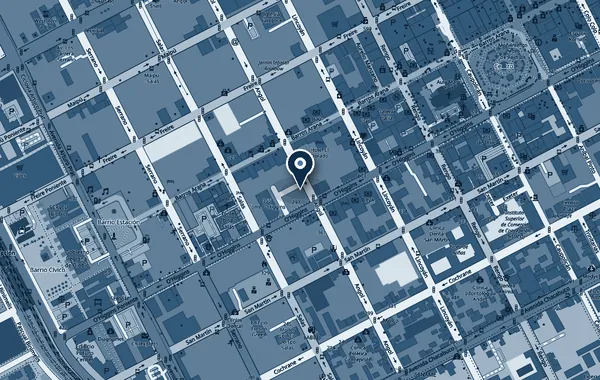
Angol 436, office 1004, Concepción, Chile. See map
Team
We work remotely with teams in Chile, Colombia and other countries.
Or leave us your details
We reply to everything you write here, by email or WhatsApp.
Partners calendar
Schedule a meeting with the partners
Pick a date, available time slot and format. Your booking syncs with our calendar (sciencelytics@gmail.com) and can be added to your Google Calendar in one click.
We search, screen and synthesize the literature on your topic following the PRISMA 2020 guideline. Every decision is recorded, so a reviewer can follow it step by step.
Who it is for
Thesis students, researchers and groups who need a defensible state of the art or a publishable review.
Typical timeline
2 to 4 weeks.
What we do
Documented, reproducible search strings for Scopus, Web of Science and PubMed.
Duplicate removal and a record of every exclusion with its reason.
Full-text reading by PhD researchers.
Data extraction and identification of gaps in the literature.
What you get
PRISMA 2020 flow diagram.
Reference database with verified DOIs.
Extraction and synthesis matrix.
Gap report to justify your contribution.
Tools
Scopus
Web of Science
PubMed
PRISMA 2020
Zotero
R and Python
Scientific research
Statistical analysis and modeling
We take your dataset, clean it and apply the analysis your question needs: from descriptive statistics to multivariate, multilevel, hierarchical, structural equation and predictive models. You get results you can interpret and defend.
Who it is for
Researchers who have already collected data, thesis students and teams responding to reviewers.
Typical timeline
2 to 4 weeks, depending on the state of the data.
What we do
Data cleaning, handling of missing values and outlier detection.
Method chosen for your design: from descriptive statistics and hypothesis testing to multivariate, multilevel, hierarchical and structural equation models (SEM).
Predictive models when the problem calls for them, with an explanation of each variable.
Sensitivity analysis to check how stable the results are.
What you get
Cleaned dataset and change log.
Reproducible code in R or Python.
Journal-ready tables and high-resolution figures (300+ DPI).
Results report in plain language.
Tools
R
Python
SPSS
Stata
tidyverse
scikit-learn
Scientific research
Publishing strategy: where to publish?
Together with you, we choose the journals where your manuscript has the best chances, comparing scope, indexing, costs and review times. This lowers the risk of a desk rejection.
Who it is for
Authors with an advanced or finished manuscript.
Typical timeline
1 to 2 weeks.
What we do
Analysis of each journal’s scope against your manuscript.
Comparison of publication costs (APC) between free and open access journals.
Review of average peer-review times.
Format check against the author guidelines.
What you get
Justified shortlist of 3 to 5 indexed journals (WoS / Scopus, Q1–Q2).
Comparison table of costs and timelines.
Requirements checklist for the chosen journal.
Help with the cover letter and the response to reviewers.
Sources
Web of Science (JCR)
Scopus (SJR)
DOAJ
Scientific research
R&D proposal writing
We structure your project so it meets the call guidelines and reads clearly in the technical evaluation: state of the art, methodology, work plan and budget.
Who it is for
Startups, companies and research groups applying for R&D&I funding.
Typical timeline
5 to 8 weeks; 3 weeks if the call closes soon.
What we do
Background review and scientific monitoring to demonstrate novelty.
Experimental design and sample size calculation.
Work plan with milestones and indicators.
Technical and budget structure following the guidelines.
What you get
Technical proposal ready to upload to the funding platform.
State of the art with verified references.
Methodology and validation plan.
Preparation for the panel pitch, if the call requires one.
Common funding sources
Corfo Crea y Valida
Start-Up Chile
MinCiencias
R&D Law (Chile)
Data and analytics
Data engineering
We connect your sources (spreadsheets, systems, databases and APIs) in one place, with processes that update the information without manual work and checks that alert you when something fails.
Who it is for
Teams that lose hours consolidating data or that do not trust their numbers.
Timeline
Defined during the initial assessment.
What we do
Assessment of data sources, quality and flows.
Scheduled, monitored ETL/ELT pipelines.
Data model and data warehouse.
Data lake on Amazon S3 or Azure Data Lake, with ingestion through AWS Lambda or Azure Data Factory.
Roles and access permissions for the data, using IAM on AWS or role-based access control on Azure.
Quality rules and documentation for every table.
What you get
Production pipelines, with their code.
Documented data warehouse or analytical database.
Data dictionary.
Training for your team.
Tools
SQL
Python
PostgreSQL
BigQuery
dbt
Airflow
Amazon S3
AWS Lambda
Azure Data Lake
Azure Data Factory
Data and analytics
Big Data
When your data no longer fits in a spreadsheet or on a single server, we design architectures that process millions of records in a distributed way, with controlled costs.
Who it is for
Organizations with large volumes of sensor data, transactions, system logs or images.
Timeline
Defined during the initial assessment.
What we do
Data lake or lakehouse architecture.
Distributed batch and real-time processing.
Storage and cost optimization.
Data governance: access, traceability and retention.
What you get
Implemented and documented architecture.
Load and transformation processes in production.
Cost and performance monitoring.
Handover to the technical team.
Tools
Apache Spark
Databricks
Kafka
Parquet
Delta Lake
Data and analytics
Data science and predictive models
We build models that anticipate demand, risk or behavior, and explain which variables drive each prediction, so your team trusts the result and uses it.
Who it is for
Companies that want to move from reports about the past to decisions made ahead of time.
Typical timeline
6 to 8 weeks.
What we do
Definition of the problem and the success metric with your team.
Forecasting, classification and time series models.
Validation with data the model has not seen.
Explainability: which variables matter and by how much.
Neural networks and deep learning when the problem calls for it.
What you get
Trained and validated model, with its code.
Performance report with error margins.
Integration with your systems or dashboards.
Monitoring and retraining plan.
Tools
Python
scikit-learn
XGBoost
SHAP
MLflow
Data and analytics
Analytics and dashboards (BI)
We design dashboards with the indicators leadership actually uses, connected to clean, up-to-date data.
Who it is for
Management and teams that currently report in scattered spreadsheets.
Typical timeline
4 to 6 weeks.
What we do
Indicators defined together with the decision-makers.
Cleaning and modeling of the sources.
Interactive dashboard design.
Dashboards in Power BI, Apache Superset or Tableau, depending on what your team already uses.
Alerts and scheduled reports.
What you get
Dashboards in production.
Documentation of every indicator.
Training session for your team.
Tools
Power BI
Apache Superset
Looker Studio
Tableau
SQL
AI and software
AI agents
We develop agents built on language models that answer with your organization’s information, draft documents and carry out tasks in your systems, with human oversight at critical points.
Who it is for
Teams with a lot of repetitive lookup, writing or customer service work.
Timeline
Defined during the assessment. We start with a focused pilot.
What we do
Mapping of the tasks worth delegating to an agent, and those that are not.
Agents with access to your documents (RAG) and to your tools through APIs.
Customer-service and internal-query chatbots connected to your documents.
Quality evaluation with real cases before release.
Privacy: your data never trains external models and, if you need it, the model runs on your own infrastructure.
What you get
Pilot agent running in your environment.
Evaluation report with hits and misses.
Usage and cost dashboard.
Documentation and training.
Tools
Python
Commercial and open language models
RAG
Vector databases
APIs
AI and software
Socratic agent for education
We build agents that guide with questions instead of giving the answer, and that work only with the material the instructor defines. Students do the reasoning and the agent points them to where to keep reading.
Who it is for
Universities, faculties and instructors who want to support group work or individual study without handing out ready-made answers.
Timeline
We define it in the initial assessment. We start with a focused pilot.
What we do
Design of the teaching path and of the question types together with the teaching team.
Agent connected to the course readings, which gives references to look up instead of quotations.
Group workspace and instructor dashboard, with each member's participation.
Informed consent, a record of who gave it and a data export with names replaced.
Evaluation with real cases before opening it to students.
What you receive
A working pilot agent, with its workspace and instructor dashboard.
Evaluation report with hits and misses.
User guide and surveys for instructors and students.
Documentation and training.
What stays on your side
Choosing and validating the readings and the agent's rules.
Holding the rights to use the material that is loaded.
AI and software
Process automation
We review your processes, find the repetitive tasks and automate them: data transfer between systems, reports, emails, documents and approvals.
Who it is for
Administrative, sales or operations teams that repeat the same tasks every week.
Timeline
Defined during the initial assessment.
What we do
Mapping of the current process and the time it takes.
Integrations between your systems, spreadsheets and email.
Workflows with approvals and a log of every step.
Alerts when something is out of the ordinary.
What you get
Working, documented automations.
Before-and-after time measurement.
User manual and go-live support.
Tools
Python
APIs REST
n8n
Power Automate
Google Apps Script
AI and software
Computer vision
We train models that detect, count, classify or measure objects in images and video, for quality control, monitoring or scientific image analysis.
Who it is for
Industry, agribusiness, healthcare and research teams that work with images or video.
Timeline
Defined during the initial assessment.
What we do
Assessment of the available images and their quality.
Labeling and data preparation.
Detection, segmentation and classification models.
Deployment in the cloud or on edge devices in the field.
What you get
Trained model with its accuracy metrics.
Application or API to use it.
Report on the model’s performance and limits.
Tools
Python
PyTorch
OpenCV
YOLO
AI and software
Software development
We design and build custom applications: internal platforms, APIs, management systems and digital products, with tests, documentation and code your team can maintain.
Who it is for
Companies and startups that need a tool not available on the market or that must replace a legacy system.
Timeline
Defined during the assessment. We work in incremental releases.
What we do
Requirements gathering and clickable prototype.
Development in short iterations, with a review at each one.
Automated testing and security review.
Deployment and initial support.
What you get
Application in production.
Source code and technical documentation.
User manual and training.
Tools
Python
TypeScript
FastAPI
React
PostgreSQL
Docker
AI and software
Web development
We build fast, secure websites and web apps that are easy to manage, designed so your clients find what they need and get in touch.
Who it is for
Companies, research centers and projects that need a professional web presence.
Timeline
Depends on the scope.
What we do
Content architecture and interface design.
Development for mobile, tablet and desktop.
Technical SEO, accessibility and page speed.
Forms, integrations and visitor analytics.
What you get
Website live on your domain.
Guide or admin panel to update content.
Security setup (HTTPS and headers).
Tools
HTML, CSS and JavaScript
React
Next.js
WordPress
AI and software
Cloud solutions
We move your systems and data to the cloud, or improve what you already have there: architecture, security, backups, continuous deployment and cost control.
Who it is for
Organizations moving off their own servers or overpaying for the cloud.
Timeline
Defined during the initial assessment.
What we do
Assessment of the current infrastructure and its costs.
Architecture design and migration plan.
Infrastructure as code and continuous deployment (CI/CD).
Security, backups and monitoring.
Access roles and permissions (IAM) with least privilege.
What you get
Documented, reproducible infrastructure.
Cost dashboard and alerts.
Backup and recovery plan.
Tools
AWS
Google Cloud
Azure
IAM
Docker
Terraform
GitHub Actions
Expert witness
Scientific and technical expert reports
When a case depends on data, a scientific study or how a system works, the court needs a report it can understand and verify. We prepare it with scientific method, and the expert explains and defends it at the hearing.
Who it is for
Lawyers, law firms, companies and individuals who need technical support in litigation or in a negotiation.
Timeline
We align it with the court deadlines from the first meeting.
What we do
Review of the available evidence and of the question the court needs answered.
Analysis with verifiable methods: statistics, data science, review of scientific studies, software and systems.
Critical review of the opposing party’s expert report.
Preparation of the presentation and the expert’s attendance at the hearing.
What you get
Expert report signed by the responsible expert, with methodology, assumptions and limitations.
Annexes with the data, code and calculations needed to reproduce the result.
Plain-language summary for the legal team.
Testimony by the expert before the court, when summoned.
Our commitment
Conclusions come from the evidence, not from the interests of whoever hires us.
Our fees do not depend on the outcome of the case.
Areas
Statistics
Data science
Telemetry and logs
Software and systems
Financial data
Scientific studies
Ethics and transparency
Your authorship, our support
In research projects the division is clear: you are the author and owner of your ideas; Sciencelytics does the technical and methodological work.
What you lead
Your research question, the hypothesis and the theoretical framework.
Your data and your fieldwork. Ownership is yours, and we work under a confidentiality agreement.
The interpretation of the findings, the discussion and the conclusions.
Signing the manuscript before the journal, the university or the committee.
The final decision: which journal to submit to and which changes to accept.
What we do
The full PRISMA protocol: searches, duplicates and full-text screening.
Cleaning and structuring your datasets.
Statistical and predictive models, with reproducible code.
Figures and tables that meet publication formats.
Analysis of Q1/Q2 journals, response times and publication costs.
Estimator
Find your recommended roadmap
Choose your profile and your need. We show you the roadmap, timelines and deliverables we recommend.
Scientific research · PRISMA 2020
Systematic literature review and evidence synthesis
Estimated timeline
4 to 6 weeks
Confidentiality
Mutual NDA · Law 19.628 (Chile)
Credits
Credits and licenses
Photographs are used under the Unsplash license. The nebula on the home section is the “Cosmic Cliffs” image of the Carina Nebula, taken by the James Webb Space Telescope, with tones adjusted to the site’s palette.